Course Details
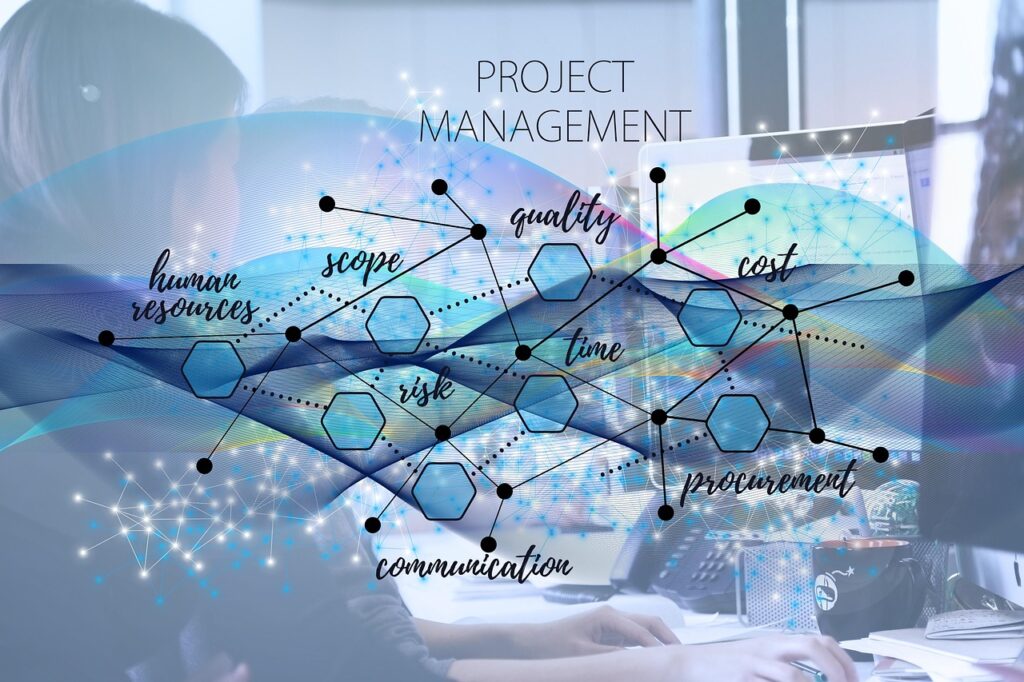
BSc (Hons) Project Management with Foundation Year
BSc (Hons) Project Management with Foundation Year gives structure and control of the project environment so that the agreed activities will produce the right products or services to meet the customer’s expectations. Since the programme has been designed to equip you with the skills to progress to a career in project management, even if you don’t have the academic confidence or qualifications or relevant experience to join a standard undergraduate course. The foundation year is perfect if students need a little extra support to start their journey to higher education, offering study-skills and guidance at every stage. Through this course, students will be able to understand structured ways to improve their skills and knowledge, covering essential areas such as planning, risk management, and leadership.
Details
- Duration: 4 years inclusive of the Foundation Year
- Study Mode: Full-time
- Assessment: Writing assignments, simulations, laboratory experiments, quizzes, and orals.
The course in project management is meant to help you get out of a theoretical knowledge about life in the academics to a professional standard level. It begins by your building up your trust in your study capacity and in the principles of management and then moves to the technologies of business, finance, and computer technologies. Later on, as you advance, the emphasis puts more on the technical side of planning, quality control, and resource procurement, and eventually, you find yourself in the high-level strategic thinking. At the degree completion, you will be equipped with the big picture perspective to manage complex global projects and nave through the hazards of the contemporary business environment.
The Project Lifecycle: All the projects have a normal process of developing an idea to the final product.
The Triple Constraint: This is the trade-off between Time, Cost and Scope. When you change one (someone wants the project done earlier), it will tend to impact the rest (it will cost more or you will need to do less work).
Risk Management: As a project manager, one should never miss out on finding what can go wrong. You get to find out the problems that might arise at an early stage and develop a Contingency Plan (Plan B) to ensure the project does not collapse because there is a mistake involved.
Stakeholder Management: Projects have numerous people-clients, bosses, team members and users. Communication is an essential aspect of the work, and it should be informed to everyone about what is going on and that they are not disappointed with what is delivered.
Quality Control: There is no need to simply complete a project, but to do it well. You also get to know how to establish Standards and carry out checks to make sure that the end product is what the customer ordered.
Team Leadership: Because a manager is not likely to do the real job by himself, you should know how to Delegate work, handle disputes between employees and how to push the team when it becomes hard.
Foundation Year
Academic Integrity and Assessment (20 credits): getting to know how to conduct research in a responsible manner and to be able to achieve the standards that are expected of university level exams and essays.
Fundamentals of Project Management (20 credits): An overview of the essential jargon, instruments, and project life cycles applied to project management to succeed.
Job Search Techniques and Professional Behaviour (20 credits): Learning the practical (finding a job) and soft (of leaving college and being an office worker) skills.
Leadership in Project Management (20 credits): How to inspire a team and steer individuals with a common objective.
Personal Development and Career Exploration (20 credits): The cogitation on your personal strengths and the choice of the industry you would like to be employed.
Study Strategies and Academic Development (20 credits): How to get better grades through better note taking, time management, and critical thinking.
Year 1
Business and Management Principles (20 credits): Learning the logistics of the way the modern company is organised and how it operates in its day-to-day activities.
Organisational Behaviour (20 credits): Learning why individuals behave in a certain way at the workplace and how the culture of an organisation affects performance.
Ethics and Social Justice (20 credits): An education on the management of projects in a manner that is just, legal, and environmental-friendly.
Financial Management for Projects (20 credits): Learning how to prepare budgets, keep track of expenses and make a project remain profitable.
Digital Skills for Project Managers (20 credits): Digital skills Project managers require skills to operate software and technology required to manage and track activities online.
Professional Skills and Teamwork (20 credits): Focussing on effective communication and the way of managing the dynamics of working in team.
Year 2
People and Performance (20 credits): Learning to treat staff fairly in order to make everyone achieve his/her targets.
Professional Development (20 credits): This is the development of long-term career plan and life-long learning.
Project Planning and Control (20 credits): This involves scheduling and milestones to ensure that a project is on schedule until completion.
Project Quality Assurance and Compliance (20 credits): Making sure that the end product is to the necessary specifications and one that complies with all the legal regulations.
Project Resources and Procurement Management (20 credits): Knowing effective ways of procurement of materials and outsourcing.
Research in Project Management (20 credits): Learning to collect the data and locate evidence-based answers to project challenges.
Year 3
Global Project Management (20 credits): Management of projects that involve international borders, time zones and other cultures.
Project Management for Innovation and Change (20 credits): Learning to be a leader who guides a company during the time of change or the development of a new product.
Risk Management in Projects (20 credits): Trying to find out the possible issues in advance and develop Plan B strategies to remain safe.
Strategic Management in Projects (20 credits): Making sure your project is set to achieve the long-term success and vision of the business overall.
Project (40 credits): A significant final project in which you utilise all the material that you have studied in a particular problem.
Career
Project Management degree is extremely adaptable, because all industries require
individuals who can accomplish tasks.
Construction Project Manager: Managing construction sites, architects and contractors.
IT Project Manager: Managing groups of engineers to introduce new applications or applications.
Operations Manager: The role is to make sure that daily operations of a company are smooth and efficient.
Supply Chain Manager: Dealing with the logistics of the transportation of goods between the factories and customers.
Event Manager: Organising large scale conference, festivals or weddings.
Risk Analyst: Assists businesses to identify and eliminate financial or operational catastrophes.
Management Consultant: This is an advisory role on how to do things better by other businesses.
Healthcare Administrator: The organisation of the installation of new medical equipment or systems in the hospital.
Apply Here
Category
Latest posts
- All Posts
- Career Guidance
- Consultant
- Education
- Education Consultancy
- Foundation Courses
- HND Programs
- Learning
- Next Consultants
- Student Success
- Student Support
- Study
- Study Opportunities
- UK Study



Tags
Contact Info
Contact us today to schedule your consultation.